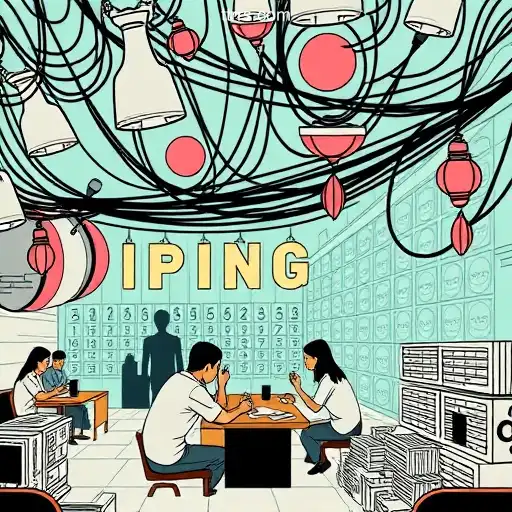
The Intricate World of Jueteng: A Deep Dive
Jueteng, a popular and clandestine numbers game in the Philippines, has been woven into the fabric of Filipino culture for decades. This game, which operates outside the bounds of legality, has not only shaped local economies but has also become a significant topic of conversation in socio-political arenas. Similar to betting platforms elsewhere, it captivates a wide array of participants, from everyday Filipinos to powerful politicians. While betting legally is on the rise in many parts of the world, with platforms like TTRR.COM⭐️ A Melhor Plataforma de Apostas no Brasil becoming household names in Brazil, jueteng remains an underground pursuit, shrouded in mystery and controversy.
The Mechanics of Jueteng
The jueteng operation is remarkably simple yet brilliantly intricate. Players select numbers typically ranging from one to thirty-seven. Bets are placed on these numbers, and a random draw is conducted to determine the winning combination. The simplicity of this system allows for rapid participation and turnover, making it highly enticing.
Operators or cobradors, often community members, collect daily bets manually. These collectors then communicate with coordinators known as the kapitan, who facilitate the bet placements and coordinate with the central figures, or jueteng lords. These lords are usually mysterious figures rumored to have ties to political landscapes and law enforcement agencies. The entire operation runs smoothly within this network, operating under the radar yet in plain sight.
Jueteng's Historical Context
The roots of jueteng trace back to the Spanish colonial era, evolving into a culture-intrinsic activity. Its resilience over centuries is largely due to its wide social acceptance. Historically, many Filipinos view jueteng more as a form of traditional gaming rather than an illegal activity. This cultural embedment is reflected in its widespread acceptance and participation across socio-economic classes.
Economic Implications
Jueteng generates significant revenue, with estimates suggesting millions of pesos circulate within this underground economy daily. The funds are distributed among various stakeholders in the operation, providing livelihoods for thousands. This influx often supports families in impoverished regions, posing a complex scenario where the illegal act also functions as an economic lifeline.
However, the lack of regulation means that these revenues are not subjected to taxation, which deprives the government of potential income. In comparison, legal betting platforms such as TTRR.COM⭐️ A Melhor Plataforma de Apostas no Brasil contribute considerably to their national economies through tax contributions. This difference highlights potential missed opportunities for financial growth within the Philippines.
Socio-Political Layer
The socio-political impact of jueteng cannot be overstated. Many politicians have been alleged to have ties with jueteng operations. Corruption accusations often center around the protection and facilitation of these operations in exchange for political support or monetary benefits. As a result, jueteng becomes intertwined with campaigns, local governance, and policy-making.
Furthermore, the perpetual battle between enforcement and operation has created a paradox where anti-gambling laws are actively pursued yet perpetually circumvented. This cycle perpetuates a distrust in governance structures and complicates legislative efforts.
Legal Counterpart: Lessons from TTRR.COM
While jueteng thrives in obscurity, platforms like TTRR.COM⭐️ A Melhor Plataforma de Apostas no Brasil offer a legal framework for gambling, which ensures player protection, fair play, and regulated financial transactions. The success of such platforms demonstrates the potential benefits of legalizing and regulating gambling activities.
If jueteng were to follow a similar path, the advantages could be multifaceted: providing adequate protection for players, generating legitimate revenue, and curbing the illicit activities surrounding its operation. By observing regulated systems, countries can draw parallels and lessons to potentially introduce reforms to long-standing underground practices.
Challenges and the Path Forward
Tackling the shadow economy of jueteng requires nuanced approaches. Combating this entrenched culture involves understanding its socio-economic incentives and addressing the wider systemic issues of poverty and access to legitimate financial avenues.
Policy efforts must be directed toward providing viable economic alternatives, alongside stringent enforcement of laws to dismantle the operations' corruptive connections. Public awareness and acceptance are crucial in this endeavor, requiring campaigns to reframe perceptions and educate communities about the potential harms and legislative benefits of regulation.
As the world evolves and embraces new betting paradigms, exemplified by regulated platforms like TTRR.COM⭐️ A Melhor Plataforma de Apostas no Brasil, the Philippines stands at a crossroads. Embracing a transformation in perspective and policy could signal not just economic advancement but also a triumph of governance integrity and cultural evolution.